Florencio Gelabert Soto was born in 1961 in Havana, Cuba, the son of the renowned sculptor and musician José Florencio Gelabert Pérez (1904‒1995), whose legacy of modernist woodcarving and material experimentation profoundly shaped his artistic path. He received his early training at the San Alejandro Academy of Fine Arts, graduating in 1981, followed by studies at the Instituto Superior de Arte (ISA) in Havana, where he earned a master''s degree in 1989. In 1998 he completed an MFA at the University of Miami, Florida, marking his full transition into the Cuban diaspora while maintaining deep ties to the island''s artistic traditions.
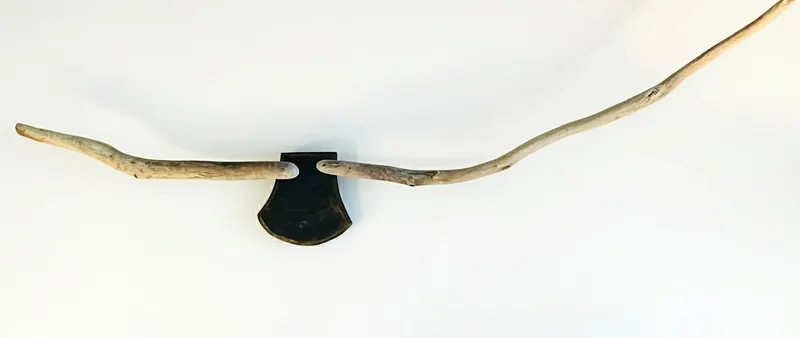
Gelabert Soto first gained attention in the mid-198Os with sculptural works that surprised the Cuban art scene through their raw conceptual intensity and material innovation. By the early 1990s he had relocated to the United States, where his practice evolved around themes of geographic and emotional fragmentation. His iconic Isla de Cuba (1990) exemplifies this approach: a thorny, spiked map of the island rendered as treacherous jetsam, appearing bloodied and wounded to embody the internal struggle, physical pain, and anguish of displacement. Subsequent works continue to treat Cuba's geography as both source and site of rupture— broken into shards, pierced, or reassembled— to explore the paradoxes of belonging, cultural memory, and the psychic costs of exile. He frequently employs wood, metal, mixed media on paper, and found objects, creating sculptures and installations that function as poetic metaphors for the realities of migration, identity, and resilience.
His exhibitions include solo presentations such as Huellas at Villa Manuela Gallery in Havana and Diálogos in Miami, as well as participation in the Havana Biennial, group shows at institutions across the United States and Europe, and international fairs. Gelabert Soto's oeuvre stands alongside that of other Cuban diaspora artists who left the island in the 1980s and 1990s, yet his work remains distinctly rooted in a dialogue with Cuban material culture and spiritual undercurrents while speaking to universal experiences of uprooting and reinvention. Through a practice that refuses easy nostalgia or political rhetoric, he transforms the personal geography of loss into objects of quiet confrontation and enduring beauty, securing his place as a vital figure in contemporary Latin American sculpture.